 English
 Español
  русский
  Français
  Deutsch
  tiếng Việt
  Nederlands
  ภาษาไทย
  magyar
  हिन्दी
  Türkçe
  العربية
  український
  فارسی
فارسی 

Why Is a Brushed Stator Production Unit Redefining Manufacturing Efficiency?
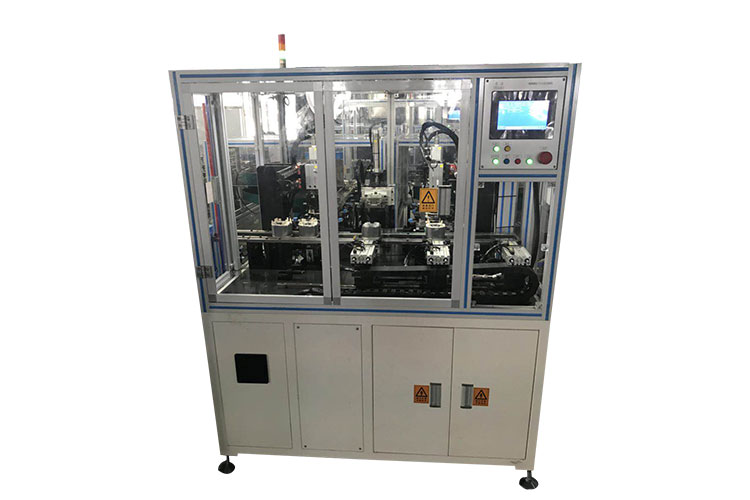
A Brushed Stator Production Unit is a specialized automated system engineered for the high-precision manufacturing of brushed motor stators. It integrates coil winding, pressing, forming, testing, and quality-control processes into one streamlined line. As industries such as automotive, power tools, household appliances, and industrial automation continue to demand higher product consistency and faster production cycles, the role of a Brushed Stator Production Unit becomes increasingly crucial.
How Does the Equipment Achieve High-Precision Stator Manufacturing?
A Brushed Stator Production Unit integrates mechanical engineering, servo control, real-time monitoring, and automated handling technologies. The goal is to reduce human intervention, eliminate production variability, and ensure uniform stator output at scale.
Below is a structured parameter overview for professional comparison:
Technical Specification Table
| Category | Parameter | Description |
|---|---|---|
| Production Capacity | Output Rate | 800–1800 pcs/hour depending on stator size and configuration |
| Applicable Stator Diameter | 20–80 mm (customizable) | |
| Winding Speed | Up to 3000 RPM servo-controlled | |
| Mechanical Structure | Winding Stations | Single or multi-station variants |
| Tooling Changeover | Quick-change modular structure | |
| Shaft & Fixture Design | Precision-ground, low-vibration | |
| Precision Performance | Winding Accuracy | ±0.05 mm |
| Tension Control | Fully automated digital tension system | |
| Slot Filling Rate | High density for optimized electromagnetic efficiency | |
| Automation & Control | Interface System | Touchscreen HMI with multilingual options |
| Runtime Monitoring | Real-time torque, tension, speed, temperature monitoring | |
| Fault Detection | Self-diagnosis, alarms, auto-stop protection | |
| Quality Management | Electrical Testing | Resistance, inductance, turn count verification |
| Mechanical Testing | Pull force, concentricity, alignment | |
| Safety & Design | Protection Grade | Enclosed safety cover, light-curtain sensors |
| Power Supply | AC 380V/50–60Hz (custom options) |
The above specifications support a consistent and repeatable manufacturing process, reducing product variability while increasing throughput.
How Does the Unit Transform Production Quality and Efficiency?
A Brushed Stator Production Unit offers significant functional advantages that directly impact operational stability, cost reduction, and performance consistency.
How Does It Improve Production Accuracy?
-
High-precision servo motors maintain consistent coil tension and winding speed.
-
Digital monitoring prevents deviations that could cause electrical performance loss.
-
Automated alignment ensures that each stator meets strict tolerance specifications.
Consistency becomes critical for industries where even micro-variations can compromise performance, such as automotive motors or medical device components.
How Does It Enhance Efficiency?
-
Multi-station systems allow simultaneous operations to reduce cycle time.
-
Automated loading and unloading stations minimize manual handling.
-
High output per hour reduces labor reliance and increases productivity.
Manufacturers experience smoother workflow integration, especially in mass-production environments.
How Does the Design Reduce Maintenance Costs?
-
Modular tooling enables faster component replacement.
-
Self-diagnostic features identify abnormal parameters before failures occur.
-
The reinforced mechanical structure supports long-term stability.
Cost-effective operation becomes a significant competitive advantage for factories.
How Does It Support Multi-Industry Adaptability?
From home appliances to industrial pumps, electric tools, and automotive motors, the unit can process a wide range of stator sizes and specifications. Customizable tooling allows each manufacturer to tailor the equipment to specific winding configurations.
Deep-Dive Functional Analysis — How Does Each Module Work?
A Brushed Stator Production Unit integrates several subsystems that function together in a synchronized manufacturing cycle.
Coil Winding Module
This module uses servo-controlled spindles to achieve precise winding counts and coil tension. It ensures slot filling is uniform, preserving electrical integrity.
Needle/Hook Winding Technology
Depending on stator geometry, the equipment supports both needle and hook winding. Needle winding is ideal for micro-motors, whereas hook winding benefits larger stator designs.
Forming and Shaping Module
After winding, coils are pressed and shaped using automated forming tools to meet dimensional accuracy. This step is crucial for ensuring motor stability during operation.
Connection and Soldering Module
The system automatically strips insulation, connects wires, and performs soldering with controlled temperature. Ensuring connection quality prevents electrical resistance increases.
Electrical Testing Module
Integrated testing stations measure resistance, insulation quality, inductance, and turn accuracy. Faulty units are automatically rejected, improving quality assurance.
Automated Packaging and Sorting
Finished stators are sorted based on testing data and prepared for packaging. This ensures that only qualified products move into the next production stage.
Market Value and Industry Impact — Why Is the Demand Rising?
Rising Demand for Electric-Driven Systems
Global trends show increasing reliance on electric motors across consumer and industrial applications. This drives the need for efficient stator manufacturing equipment.
Automation Reshaping Factories
Labor shortages and demands for consistent quality push companies toward automated stator production units.
Higher Accuracy Requirements in Emerging Industries
Robotics, drones, and smart appliances require motors with precise electromagnetic characteristics. This increases demand for stator manufacturing equipment capable of maintaining tight tolerances.
Environmental and Cost Advantages
Automated stator machines reduce material waste and energy consumption, supporting sustainability goals across manufacturing sectors worldwide.
How Will Brushed Stator Production Technology Evolve?
Integration with Smart Manufacturing Systems
Future units are expected to connect with cloud-based production monitoring systems. Real-time analytics will allow preventive maintenance and advanced product traceability.
Higher-Level Automation
The shift toward fully unmanned workshops continues. Future developments may include:
-
automated AGV material transport
-
AI-assisted parameter optimization
-
virtual simulation for tooling design
Miniaturization and Precision Upgrades
As motors continue to shrink in size, precision demands will increase. Micro-stator winding technology will become more important, especially for medical and micro-robotic devices.
Energy-Efficient Production Lines
Manufacturers will increasingly seek solutions that reduce power consumption while maximizing output. The next generation of equipment may incorporate regenerative servo drives and smart power management.
Common Questions About Brushed Stator Production Units
Q1: How does a Brushed Stator Production Unit maintain stable coil tension during high-speed winding?
A: The machine uses a digitally controlled tension system with servo feedback. Real-time sensors monitor tension throughout the entire winding cycle. When variations occur due to material inconsistencies or speed changes, the system automatically adjusts torque output to maintain stability. This ensures that winding density remains uniform, reducing coil deformation and improving motor performance.
Q2: What determines the output speed of the unit?
A: Output speed is influenced by stator size, winding complexity, the number of stations, and the selected production mode. Smaller stators generally allow higher speeds, while multi-station configurations significantly increase total output. Optimized servo response and automated loading systems also help achieve high hourly throughput while maintaining stability and precision.
How Can Manufacturers Leverage This Equipment for Competitive Growth?
A Brushed Stator Production Unit provides manufacturers with an advanced, scalable solution for producing high-quality brushed motor stators. Whether the goal is increased production capacity, improved product consistency, or reduced operational costs, the unit delivers substantial benefits across every industry that relies on precision motor components. With rising global demand for electric-driven systems, investing in efficient and automated stator manufacturing technology enhances competitiveness and supports long-term development.
Manufacturers seeking reliability, performance, and professional engineering support may consider solutions from Shuairui®, a brand recognized for its engineering expertise and advanced production system design. For consultation, configuration guidance, or customized production solutions — contact us for further technical support and equipment recommendations.
Send Inquiry


X
We use cookies to offer you a better browsing experience, analyze site traffic and personalize content. By using this site, you agree to our use of cookies.
Privacy Policy